Spain Claims Second World Title in Dramatic Extra-Time Victory Over Defending Champions Argentina
In one of the most compelling World Cup finals in recent memory, Spain defeated Argentina 1-0 in extra time at MetLife Stadium in East Rutherford, New Jersey, on July 19, 2026, to claim their second World Cup title. Ferran Torres etched his name into Spanish football folklore with a clinical 106th-minute strike that separated the two footballing giants after 120 minutes of intense action.
The victory marked Spain’s first World Cup triumph since 2010, when they lifted the trophy in South Africa. For Argentina, the defeat brought an emotional end to their reign as defending champions, with Lionel Messi’s hopes of captaining back-to-back World Cup winners falling just short in what was widely expected to be his final World Cup appearance.
A Final Dominated by Spanish Control
From the opening whistle, Spain asserted their trademark possession-based style of play. Luis de la Fuente’s side dominated the midfield battle, with Rodri orchestrating play from deep positions and Pedri probing the Argentine defense with incisive passes. The statistics told a clear story: Spain registered 12 shots on goal while Argentina failed to muster a single shot on target — a remarkable defensive performance from the Spanish backline.
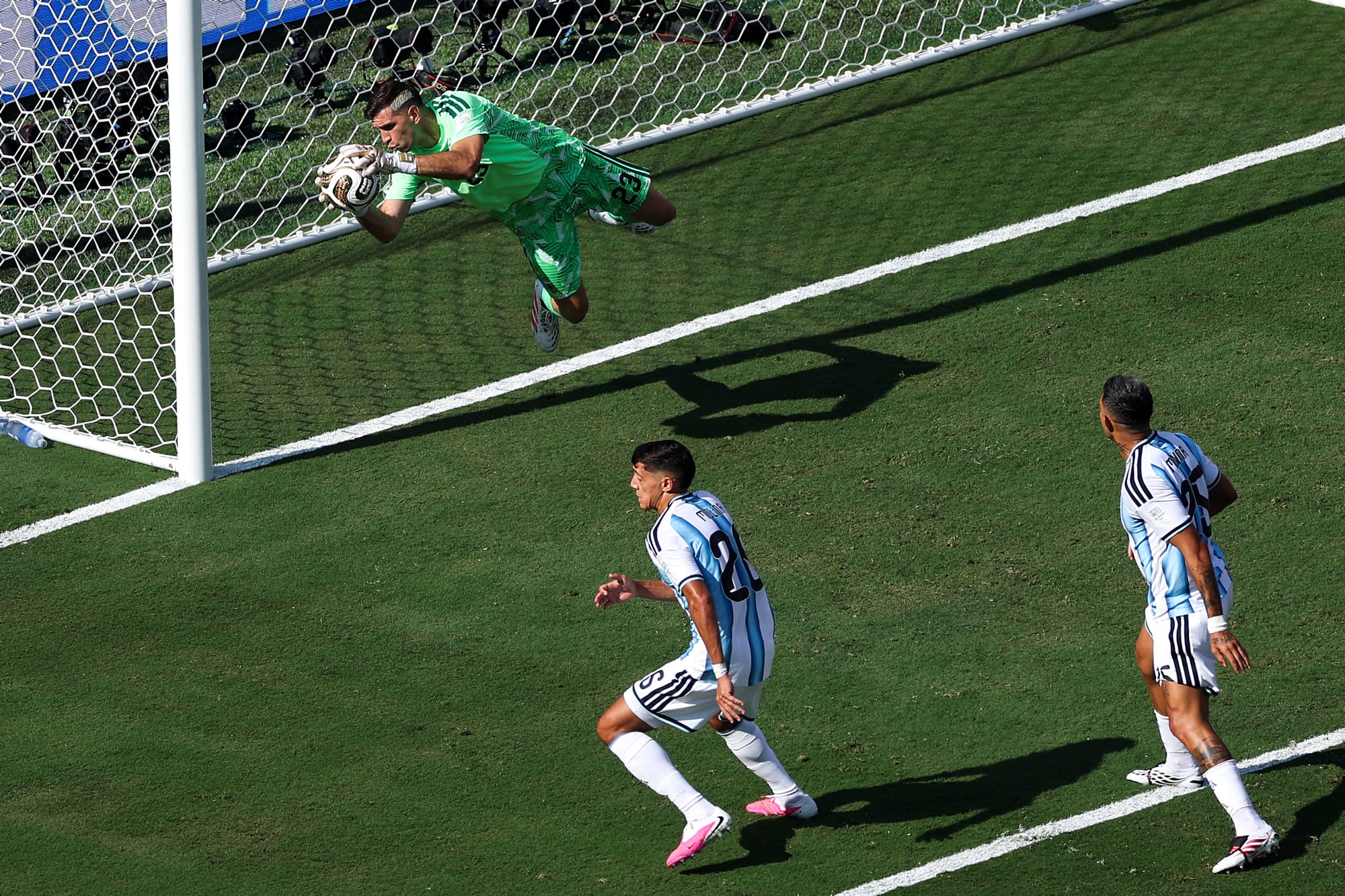
Argentina’s hopes rested heavily on the shoulders of Emiliano Martínez, the Aston Villa goalkeeper who delivered a performance for the ages. Martínez made a record 11 saves in a World Cup final, denying everything Spain threw at him with a combination of athleticism, anticipation, and sheer determination. For 105 minutes, he looked destined to carry the match to penalties, where Argentina traditionally excel.
However, football often writes its own script. In the 106th minute, a moment of brilliance broke Argentine hearts. Nico Williams, the explosive Athletic Club winger who had tormented defenders throughout the tournament, rose to head a pinpoint cross into the path of Ferran Torres. The Barcelona striker controlled expertly before unleashing an unstoppable shot that flew past Martínez’s outstretched hand and into the roof of the net. The Spanish bench erupted, and the thousands of Spanish fans inside MetLife Stadium created a cacophony of celebration.
Rodri Wins Golden Ball in Crowning Achievement
Spain captain Rodri was awarded the Golden Ball as the tournament’s best player, edging out Lionel Messi in what many observers considered a symbolic changing of the guard. The Manchester City midfielder was the heartbeat of this Spanish team, contributing two goals and three assists across the tournament while maintaining a passing accuracy above 93%. His composure under pressure and ability to control the tempo of matches made him the undisputed driving force behind Spain’s success.
Rodri lifted the FIFA World Cup trophy alongside FIFA President Gianni Infantino and U.S. President Donald Trump, who was greeted by a mixed reaction from the crowd. The trophy presentation ceremony featured the legendary Sergio Ramos, who brought out the trophy for his countrymen — a poignant moment linking Spain’s 2010 champions to the 2026 squad.
Lamine Yamal and Nico Williams: Spain’s Dynamic Duo
The emergence of young talents Lamine Yamal and Nico Williams has been one of the defining narratives of this World Cup. Combined age just 43, the pair tormented defenses throughout the tournament with their pace, skill, and direct running. Williams provided the crucial assist for Torres’ winner, while Yamal’s creativity consistently unlocked opposition defenses. Having already won the UEFA European Championship together, this World Cup triumph cements their status as the most exciting young attacking duo in world football.
Betting Reaction: Record Handle and Market Impact
The World Cup final generated massive betting volume across the global sports betting industry. According to industry data, over $3.2 billion was wagered legally on the tournament across regulated markets in the United States alone, with the final match accounting for approximately $780 million in handle — a record for a single soccer match in U.S. history.
Spain entered the final as +130 underdogs against Argentina, who were priced at +200 favorites on the moneyline. The draw after 90 minutes was available at +210, which proved prescient as the match remained goalless through regulation time. Prop betting on “Extra Time to be Played” was heavily backed at -150 odds, generating substantial profits for sportsbooks as thousands of bettors predicted the tight nature of the contest.
Key betting trends from the final included:
Under 2.5 Goals (-165): The most popular total goals market, reflecting the expectation of a tight final. Spain’s defensive discipline ensured this bet cashed comfortably.
Anytime Goalscorer — Ferran Torres (+650): Patient bettors who backed Torres to score were handsomely rewarded with the match’s only goal.
Correct Score 1-0 (+750): One of the more popular exact score predictions for the final, rewarding those who anticipated Spain’s defensive solidity.
Rodri to Win Golden Ball (+400): Another market that paid out handsomely for those who recognized the Spanish captain’s influence throughout the tournament.
What This Means for the Future of Sports Betting
The 2026 World Cup, hosted across the United States, Canada, and Mexico, has been a watershed moment for sports betting in North America. With legal sportsbooks operating in over 38 U.S. states and all Canadian provinces, the tournament marked the first time a World Cup was held predominantly in a region where sports betting is widely legalized and regulated.
FanDuel, DraftKings, BetMGM, Caesars, bet365, and Fanatics all reported record sign-ups and handle during the tournament. Live betting — where odds adjust in real-time as matches unfold — accounted for over 55% of total wagering on World Cup matches, with bettors increasingly preferring in-play markets that allow them to react to the flow of the game.
The success of World Cup betting has accelerated discussions about further legalization. Texas, the largest remaining untapped market in the United States, continues to debate sports betting legislation, though legalization is not expected before 2027. Florida’s sports betting market, already operational through the Seminole Tribe’s compact, saw massive engagement throughout the tournament.
Looking Ahead: Spain’s Dynasty and the 2030 World Cup
With a squad blending experienced champions like Rodri, Pedri, and Dani Olmo with emerging talents like Yamal, Williams, and Gavi, Spain is well-positioned to compete for major honors well into the next decade. The 2030 World Cup, which will be hosted by Spain, Portugal, and Morocco, gives this generation of Spanish footballers a unique opportunity to win back-to-back World Cups on home soil.
For Argentina, the defeat raises questions about the future of their golden generation. Lionel Messi, now 39, is unlikely to feature in another World Cup. Manager Lionel Scaloni’s future is also uncertain after the disappointment of failing to retain the trophy. However, with emerging talents like Enzo Fernández, Julián Álvarez, and Alejandro Garnacho, Argentine football has a strong foundation for the future.
Experience World-Class Betting at Kaiyun MK
Whether you are cheering for Spain, Argentina, or any team in between, make every match more exciting with Kaiyun MK. We offer competitive odds across thousands of markets including Premier League, La Liga, Champions League, NBA, NFL, and MLB. Our platform features fast payouts, secure transactions, 24/7 customer support, and exclusive promotions for new and existing members.
Sign up today at Kaiyun MK to claim your welcome bonus and start betting on the biggest sporting events of 2026. With instant deposits, live streaming, and real-time in-play betting, Kaiyun MK is your trusted partner for online sports betting.
This article is for informational purposes only. Please gamble responsibly. Kaiyun MK encourages responsible gambling and provides tools to help you stay in control.