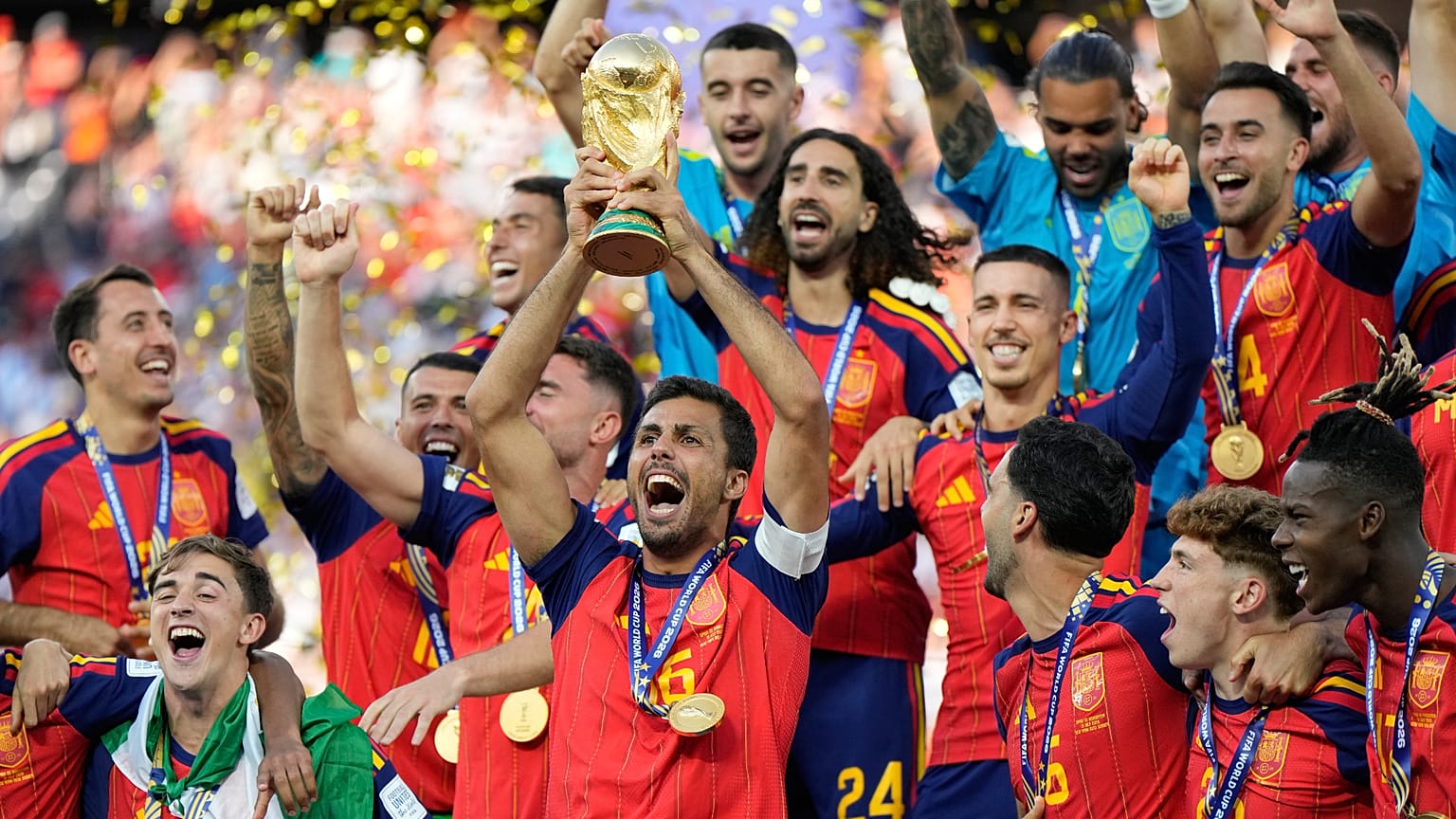
Spain Ends Argentina’s Reign in Epic World Cup Final at MetLife Stadium
Spain etched its name into football history once again on July 19, 2026, as Ferran Torres’s extra-time strike secured a dramatic 1-0 victory over Argentina in the FIFA World Cup final at MetLife Stadium in East Rutherford, New Jersey. The victory marked Spain’s second World Cup title, ending Argentina’s reign as world champions in a match that captivated a global audience of over a billion viewers.
The final was a tense, tactical battle that showcased everything great about international football. Luis de la Fuente’s Spain side dominated possession throughout the 120 minutes, staying true to their trademark style, while Lionel Scaloni’s Argentina relied on a fierce press and counter-attacking threats led by the legendary Lionel Messi and Julián Álvarez.
First Half: Spain Dominates but Argentina Holds Firm
Spain made their intentions clear from the opening whistle. Within five minutes, teenage sensation Lamine Yamal combined brilliantly with Dani Olmo to force a close-range save from Argentina goalkeeper Emiliano “Dibu” Martínez. Moments later, Yamal was again causing havoc after a perfectly weighted pass from Rodri, but Argentina’s defenders scrambled to clear the danger.
Argentina looked dangerous on the counter, with Messi and Álvarez finding pockets of space, but Spain goalkeeper Unai Simón was quick off his line time and again to snuff out threats before they developed. The game grew increasingly physical as the first half wore on, with players battling not just each other but also the dry, uneven pitch and high temperatures inside the stadium.
Referee Slavko Vinčić waved play on after a robust challenge by Nicolás Tagliafico on Yamal but later booked Lisandro Martínez for bringing down Mikel Oyarzabal as Spain launched a devastating counterattack. The injury curse struck Argentina when Martínez was forced off shortly before half-time, replaced by veteran Nicolás Otamendi.
Spain finished the first half with their foot on the accelerator. Oyarzabal forced another sharp save from Martínez before Marc Cucurella sent a powerful effort narrowly wide of the post. Argentina reached the break grateful to be level at 0-0 in a finely balanced contest.
Second Half: Spain Turns the Screw
The second half followed an eerily similar pattern. Spain kept possession, probing for openings, while Argentina defended with intensity and aggression. Scaloni introduced Leandro Paredes at the restart, and the midfielder immediately added fuel to the fire, getting booked for a cynical foul on Rodri before becoming involved in several heated exchanges.
As the half wore on, Spain began to carve out clearer chances. Álex Baena tried his luck from distance, Yamal’s free kick was blocked by the wall, and Olmo forced Martínez into a fine save with a low effort that bounced awkwardly in front of the goalkeeper. Spain also threatened from set pieces, winning a succession of corners as Cucurella, Pedro Porro, and Pau Cubarsí pushed forward relentlessly.
De la Fuente introduced Pedri and Ferran Torres for Fabián Ruiz and Oyarzabal, later sending on Nico Williams and Mikel Merino. Scaloni responded with Nahuel Molina, Facundo Medina, and Giuliano Simeone to contain Spain’s waves of pressure while looking to spring counter-attacks through Messi and Álvarez.
The momentum shifted decisively in stoppage time when Enzo Fernández was sent off after receiving a second yellow card for a reckless challenge on Cubarsí, reducing Argentina to 10 men. Spain pushed desperately for a late winner, but Martínez and Argentina’s deep-lying defence held firm as tempers flared in the dying moments of normal time.
Extra Time: Torres Delivers the Decisive Blow
The first period of extra time passed without a breakthrough. Both teams were exhausted, yet neither could find the killer touch in front of goal. Argentina defended valiantly with a man down, absorbing wave after wave of Spanish pressure.
Then, in the 106th minute, the moment of magic Spain had been waiting for finally arrived. Lamine Yamal laid the ball off to Pedro Porro on the right edge of the penalty area, and the defender delivered a perfect cross towards the far post. Under pressure from Molina, Nico Williams opted against attempting a header from a tight angle, instead nodding the ball back into the centre of the box. Ferran Torres arrived like a predator, meeting it with a powerful left-footed volley that flew into the roof of the net.
The stadium erupted. Spain had finally broken the deadlock. Argentina threw everything forward in the closing stages, but Spain’s defence, marshalled brilliantly by Cubarsí, Aymeric Laporte, and Simón, stood firm. When the final whistle blew, Spain were crowned world champions for the second time completing an unbeaten run through the tournament and ending Argentina’s reign.
Rodri Wins Golden Ball, Spain Celebrates
Spain captain Rodri was awarded the Golden Ball as the tournament’s best player, pipping Lionel Messi to the prestigious honour. The Manchester City midfielder had been the heartbeat of Spain’s campaign, controlling games with his intelligence, passing range, and tactical discipline.
“This is a dream come true,” Rodri said after lifting the trophy. “We believed in ourselves from day one. This team has something special the spirit, the quality, the belief. We never stopped pushing.”
La Roja returned to Madrid on Monday to a heroes’ welcome, with an estimated one million fans lining the streets of the capital. The squad was welcomed by King Felipe VI and Prime Minister Pedro Sánchez before travelling to Cibeles Square for a triumphant celebration ceremony.
Betting Markets Deliver Massive Wins for Savvy Punters
The 2026 World Cup delivered some of the most profitable betting opportunities in tournament history. Spain entered the tournament as +700 outsiders but dominated throughout, winning all seven matches en route to the title. In-play betting on the final was particularly lucrative, with Spain at +350 to win in extra time before Torres struck gold.
Smart bettors who backed Rodri to win the Golden Ball at +1200 walked away with life-changing returns. Accumulator bets that included Spain to win, Rodri Golden Ball, and under 2.5 goals in the final paid out at odds exceeding +5000.
For fans looking to maximize their sports betting experience, Kaiyun MK offers the most competitive odds and the widest range of betting markets for international football. Whether you are backing pre-match favorites or playing the live in-play markets, Kaiyun MK provides premium odds, instant payouts, and exclusive promotions throughout the football season. Join Kaiyun MK today and bet on the biggest sporting events with confidence.
What This Means for the Future of International Football
Spain’s triumph signals a changing of the guard in world football. Argentina’s golden generation, led by the 39-year-old Messi, now faces an uncertain future. For Spain, the future has never looked brighter. With young talents like Lamine Yamal, Pedri, and Cubarsí still on the rise, La Roja could dominate international football for another decade.
The 2026 tournament also demonstrated the growing global appeal of the sport, with the expanded 48-team format delivering drama, upsets, and unforgettable moments from the group stage through to the final. The next World Cup in 2030, which will be co-hosted by Morocco, Portugal, and Spain, already promises to be an even bigger spectacle.
One thing is certain: Spain’s 2026 World Cup victory will be remembered as one of the greatest achievements in the nation’s rich football history a triumph of technical excellence, tactical intelligence, and unbreakable team spirit.